
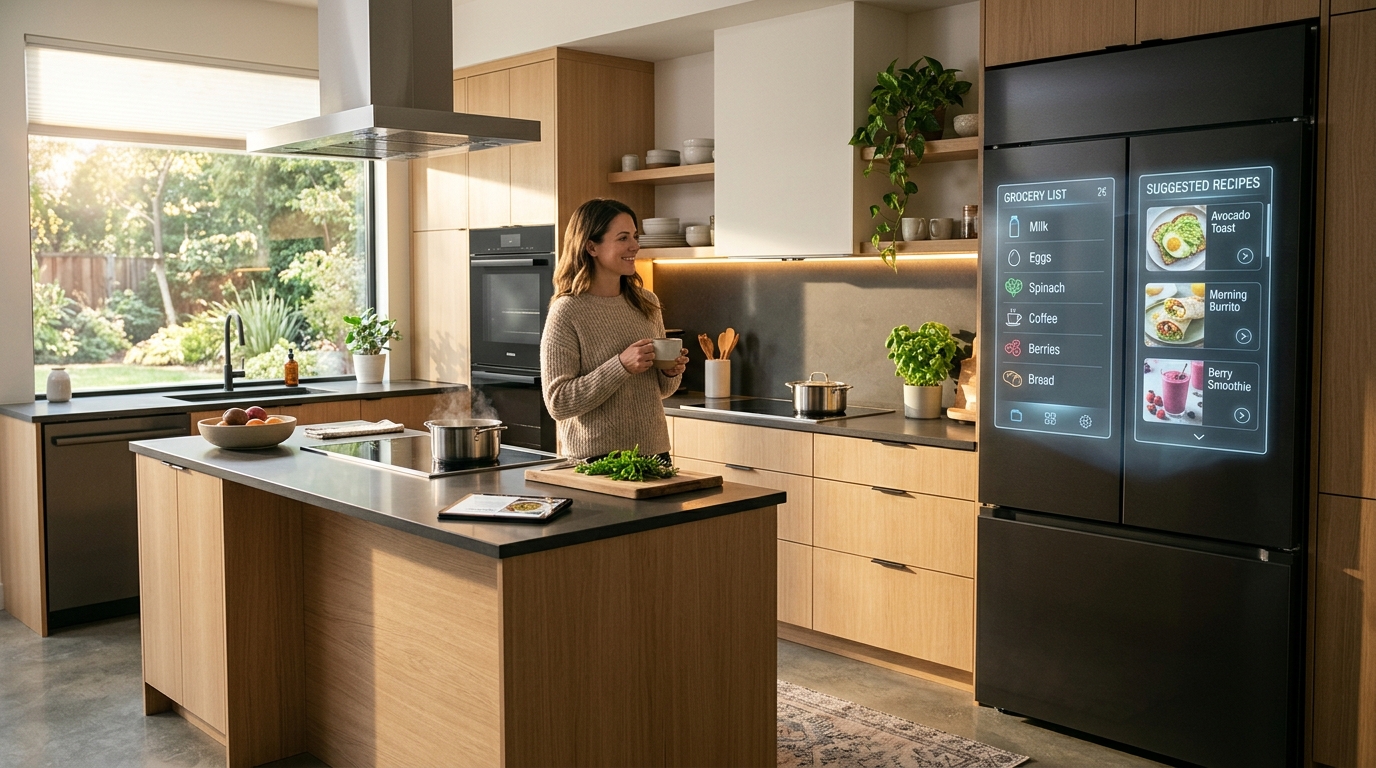
Smart home technology has become more than just a futuristic concept; it’s a reality that more and more homes today feature. These Internet-of-Things gadgets provide real-world convenience and productivity, from voice control to lighting and security. Homeowners can gain insights into the advantages and typical characteristics of smart homes, along with some key factors to consider, to help determine where they want to invest in their own home.
- What Defines a Smart Home
- Increased Convenience
- Improved Energy Efficiency
- Enhanced Home Security
- Greater Accessibility
- Popular Smart Home Features
- Smart Lighting Systems
- Smart Thermostats
- Voice-Activated Assistants
- Smart Security Devices
- Smart Appliances
- Compatibility Across Devices
- Reliance on Internet Connectivity
- Upfront and Ongoing Costs
- Final Thoughts
What Defines a Smart Home
A smart home is a home that has Internet-enabled devices with the option to control them remotely, have them automated or be controlled by other Internet-enabled devices to make life easier, more secure and more efficient. They can be as basic as standalone systems or as comprehensive as an integrated ecosystem controlled with a central hub or app.
Smart Home technology offers numerous benefits, such as:Smart Home technology has many advantages, including:
Increased Convenience
Smart home devices enable homeowners to adjust the lighting, temperature and appliances from afar or by voice command, eliminating the need for hand adjustments all day long. This is a blessing for an active family with many activities in one day.
Improved Energy Efficiency
Smart thermostats and lighting systems can adjust automatically when they are not in use, or as the day progresses, which can help to save energy that isn’t needed. This efficiency over time can mean significant savings on utility bills.
Enhanced Home Security
Smart security systems, such as cameras, doorbell cameras, and smart locks, offer real-time monitoring and remote access, so homeowners can keep track of their property from anywhere. This visibility provides peace of mind, especially if you’re on the go for long periods of time.
Greater Accessibility
Smart home technology is an excellent option for people with mobility problems, as they can control the lights, locks and appliances in their home via voice commands or apps, which may otherwise need physical effort.
Popular Smart Home Features
Smart Lighting Systems
These systems enable the remote or automated control of brightness, colour and scheduling, and commonly incorporate into a variety of routines, such as waking lights that simulate daylight or automatically switch off the lights when a room is empty.
Smart Thermostats
Smart thermostats can adapt over time to your home’s heating and cooling habits, therefore providing better comfort and saving energy. Some also have remote control via an app on your smartphone.
Voice-Activated Assistants
Smart speaker devices are used to control several connected devices, interact with other smart devices or ask questions, sometimes acting as the main control panel for a larger smart home system.
Smart Security Devices
These devices can range from video doorbells to AI-driven motion cameras and smart locks that increase the control and monitoring of your home security system, and can deliver real-time alerts straight to a homeowner’s phone.
Smart Appliances
Smart capability is now present in numerous modern appliances, ranging from refrigerators to washing machines, providing convenience to daily chores and tasks.
Before investing, there are a few things to take into account.There are a few factors to consider before investing.
Compatibility Across Devices
Not every smart home entity is compatible with each other, especially inter-brand or inter-ecosystem. When buying multiple devices, do some research beforehand to prevent frustrations when integration is required.
Data and privacy: how to keep it safe.Data and privacy: keeping it safe.
Data is gathered by connected devices and, in some instances, they will be listening to voice commands, which brings up serious issues of privacy. By checking the privacy policy and security measures of a device, you can ensure that your personal data is kept secure.
Reliance on Internet Connectivity
A lot of the smart devices in the home need to be connected to the Internet to ensure they work correctly, so there are chances that connectivity issues could affect automated systems or remote access. Backing up other critical functions, such as securing the property, should be taken into account.
Upfront and Ongoing Costs
Some smart home devices are fairly inexpensive, but a smart home system can be expensive and require a monthly subscription to offer additional smart home features, such as cloud storage of security footage.
Take the first step in implementing smart home technology.Start using smart home technology.
Begin with the more potent devices.Use the more powerful devices first.
Instead of purchasing all the technology at once, implementing it on a home device by home device will help homeowners get a feel for the technology and determine what truly makes their lives easier.
Use a consistent ecosystem.Use a uniform ecosystem.
Premium devices that are compatible within the ecosystem, from the outset ease future expansion and minimise connectivity or integration problems as your smart home system expands.
Final Thoughts
While it may seem like a modern luxury, smart home technology truly has a place in contemporary households with its proven advantages of convenience, energy savings and security. With knowledge of the available options, and thoughtful consideration of compatibility and privacy and cost issues, the homeowner can design a smart home system that will truly make the day more comfortable.