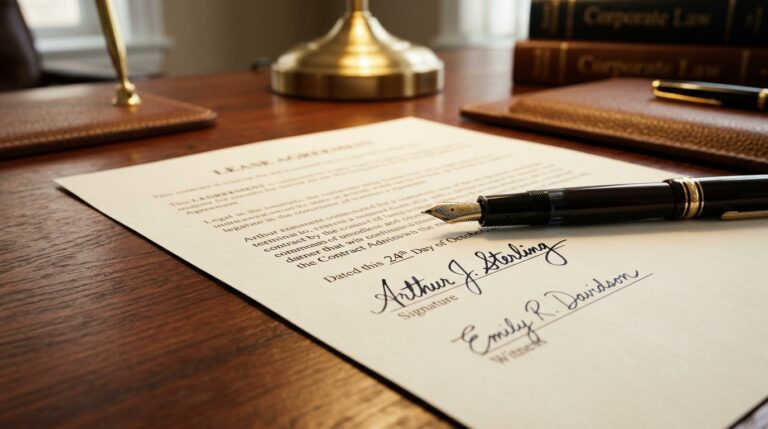

Whether it’s a medical emergency, a business dispute or the loss of a loved one, legal documents can often be filed away and forgotten upon until a crisis occurs, at which point they suddenly become very important. However, by this time, disorganized or lost documents can cause unwarranted stress and complications. It’s not only a legal requirement, it’s a practical tool that helps keep you and your family safe.
- Why Legal Documentation Matters
- Powers of Attorney
- Healthcare Directives
- Lease Agreements
- Business-Related Legal Documents
- Formation and Operating Documents
- Contracts and Agreements
- Employment Records
- Financial and Insurance Documents
- Insurance Policies
- Tax Records
- The Risks of Poor Documentation
- Increased Vulnerability During Disputes
- Final Thoughts
Why Legal Documentation Matters
Legals documents establish your rights, responsibilities and wishes and they are official proof of these in a situation that may otherwise cause confusion or disagreement. Even an innocent issue can get complicated, time consuming and expensive to rectify if documentation is not provided.
These are the legal notes that every person needs.These are the legal papers that each individual should have.
Wills and Estate Planning Documents
If your will is well drafted, then you will be able to distribute your assets according to your wishes, not your state’s default law. The lack of one can create additional stress and possible conflict in a family at an already stressful time.
Powers of Attorney
A Power of Attorney allows someone to act on your behalf if you can’t make financial or medical decisions for yourself. This document will provide you with peace of mind that your affairs will be in order if you become ill or incapacitated.
Healthcare Directives
This is also known as a “living will” and tells your doctors what you want to have done if you cannot speak for yourself. This helps to clarify the situation for healthcare providers and relatives in challenging situations.
Here are some vital papers for homeowners and renters.These are some key papers to note for homeowners and renters.
The transfer of property deeds and titles.Transfer of property deeds and titles.
The documents are official proof of ownership and are vital for any future sale, refinancing or legal dispute that arises with the property. The maintenance of these in a safe, easy-to-reach place ensures that there are no issues to come.
Lease Agreements
A solid lease agreement for renters will define both the rights of the tenant and the obligations of the landlord, and will be documented properly to ensure that both sides are protected in case of disagreement about rent, maintenance or the end of the lease.
Business-Related Legal Documents
Formation and Operating Documents
Owners of the business should have formal documentation of the business’s entity, such as articles of incorporation, an LLC operating agreement, or partnership agreements. These documents can be useful to understand who owns what and what the responsibilities and liability protections are.
Contracts and Agreements
Maintaining an organized contract file with all your clients, vendors and employees will provide you with the necessary protection in case of any controversy. Clear agreements, backed up by documentation, make it much easier to have disagreements resolved on the basis of documented terms.
Employment Records
Keeping all employee agreements, policies and compliance paperwork up to date are important to a business to avoid possible employment practices lawsuits.
Financial and Insurance Documents
Insurance Policies
Having up-to-date insurance policies and policies readily available keeps you educated about your insurance and also can help you to react promptly in the case of a claim. It’s true for all kinds of insurance, including medical, auto, home, and business.
Tax Records
Keeping well-organized tax records for a few years will benefit you should an audit occur, as well as help you with other financial and legal issues including loan applications and estate planning.
The Risks of Poor Documentation
Increased Vulnerability During Disputes
When there is no legal documentation, it can become much harder and more expensive to deal with disputes, whether they be personal, financial or business. Keeping appropriate records can give real proof to avoid extended conflicts.
There are complications for loved ones too.There are complications too for loved ones.
When a person dies or there is a medical emergency, family members may be already stressed and the lack of or disarranged documents can be a burden. When preparing, loved ones are spared the additional difficulty.
The legal and financial consequences are often significantly more severe.
In the business world, for example, record-keeping issues can lead to issues with compliance, fines, or weaker legal positions in disputes.
When handling legal documents, follow these best practices:
Maintain records and information in an orderly and easy-to-reach manner.
Whether it’s physical or digital, having key paperwork stored in a secure, organized manner makes it easy to find the documents when you need them. Access information can be shared with a trusted family member or attorney for added security.
Ensure that review and update are performed regularly.
As life goes on, it is important to review legal documents such as a will or power of attorney documents from time to time to make sure they still reflect your wishes and situation.
Be able to collaborate with legal professionals.Provide support to the legal profession.
If you are involved in a document that is important, such as a will, business contracts or a complicated contract, it is best if you have a qualified attorney handle it to make sure it is drafted correctly and legally.
Final Thoughts
Taking steps to keep legal documents in order is a proactive measure that will help to keep things clear, protected and at ease for everyday and unforeseen situations. You not only preserve your own interest but also prevent your family members from additional troubles in hard times when essential documents are organized, up-to-date, and easily reachable.
This article is for informational purposes only and should not be considered legal advice. Please seek guidance that is specific to you by talking with a licensed lawyer.